
AI strategy, media innovation, and practical growth systems.
I help brands and creators use AI, digital media, SEO, and automation to produce better content and grow with clarity.
Building a Consistent AI Film Across Multiple Characters, Scenes and Generations
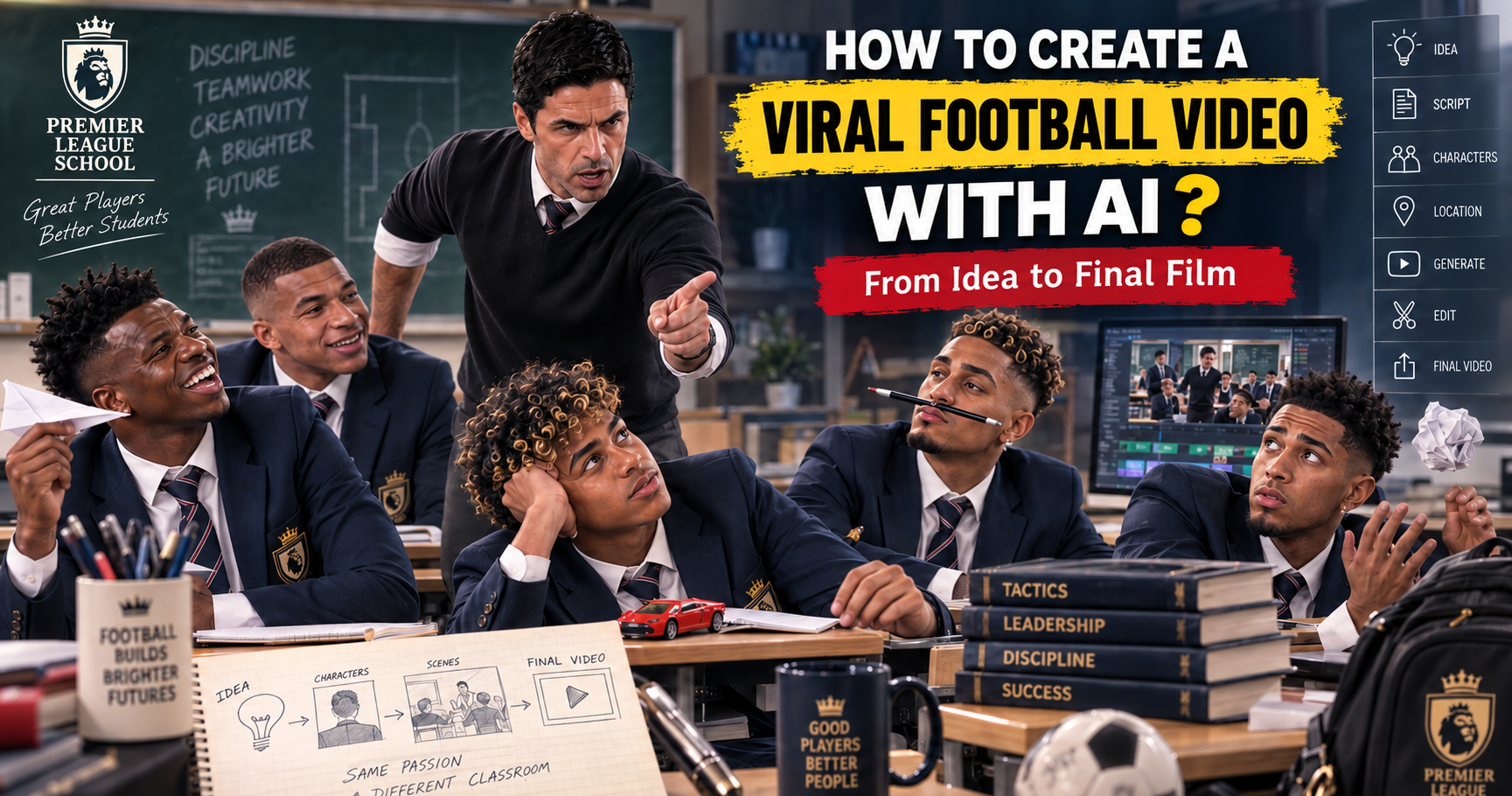
Premier League School is an AI-assisted short film that reimagines famous football players as students in a chaotic classroom, with Mikel Arteta trying to maintain order as their increasingly frustrated teacher.
The challenge was not generating one impressive AI shot. It was creating a complete story in which characters, clothing, environment, props and visual language remained recognizable across multiple independently generated scenes.
The project combined concept development, visual scripting, prompt engineering, character design, location references, AI video generation, shot selection, editing and sound design into one controlled production workflow.
One Story. Multiple AI Generations.
Instead of asking one model to generate an entire film at once, the story was divided into controlled production units that could be generated, evaluated and refined independently.
Generated as separate production sequences.
Each requiring consistent visual identity.
Edited into one continuous narrative.
Storytelling driven by action, timing and expressions.
Project Scope
AI Can Generate a Shot. Can It Generate a Film?
Generative video models can produce impressive individual clips, but narrative filmmaking introduces a different problem: continuity.
A face may change between scenes. Hair, clothing and body proportions can shift. A classroom can suddenly have a different board, different windows or a completely different layout.
When several independently generated clips are edited together, these small inconsistencies immediately reveal that the shots were created separately.
The challenge was not generating more footage. It was designing a system that made independent generations feel like parts of the same film.
Designing Consistency Before Generating Video
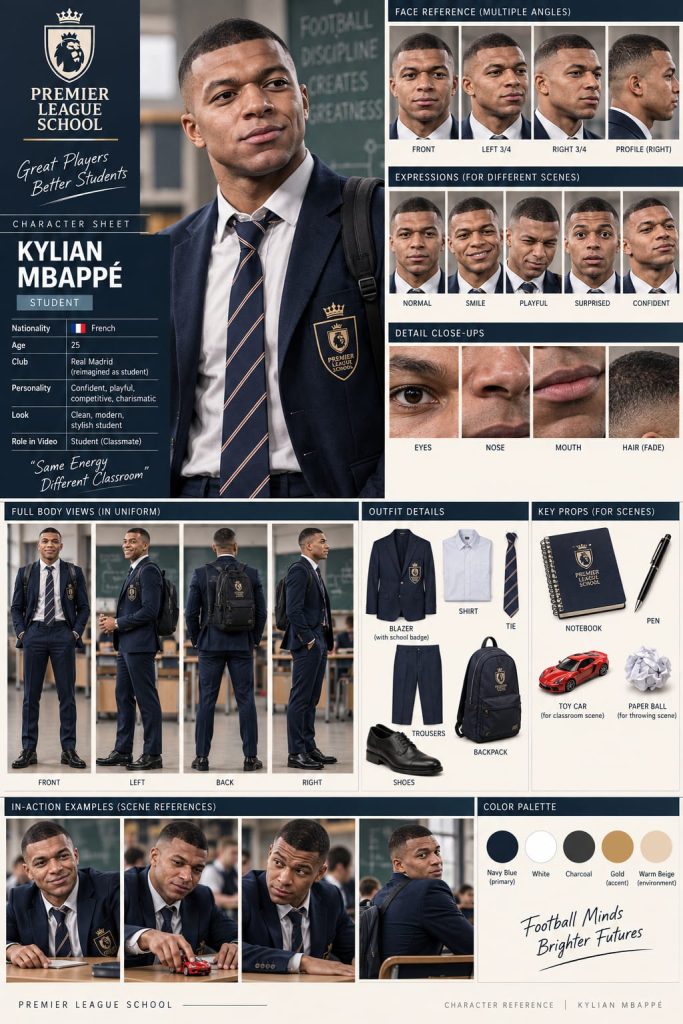
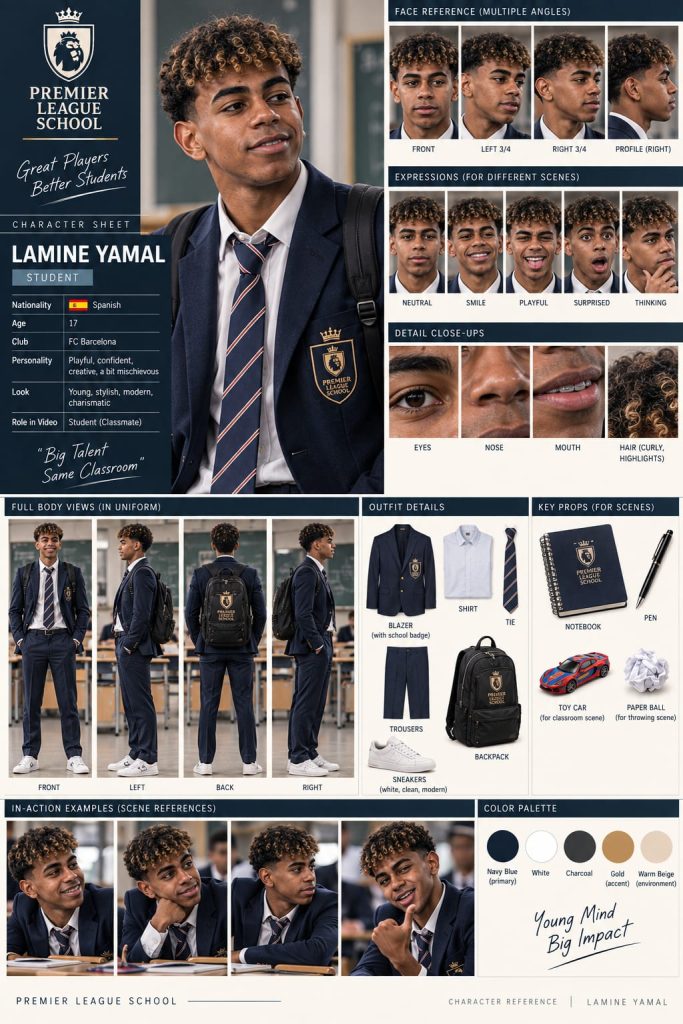
Before video generation began, each key character was treated like part of a traditional production pipeline.
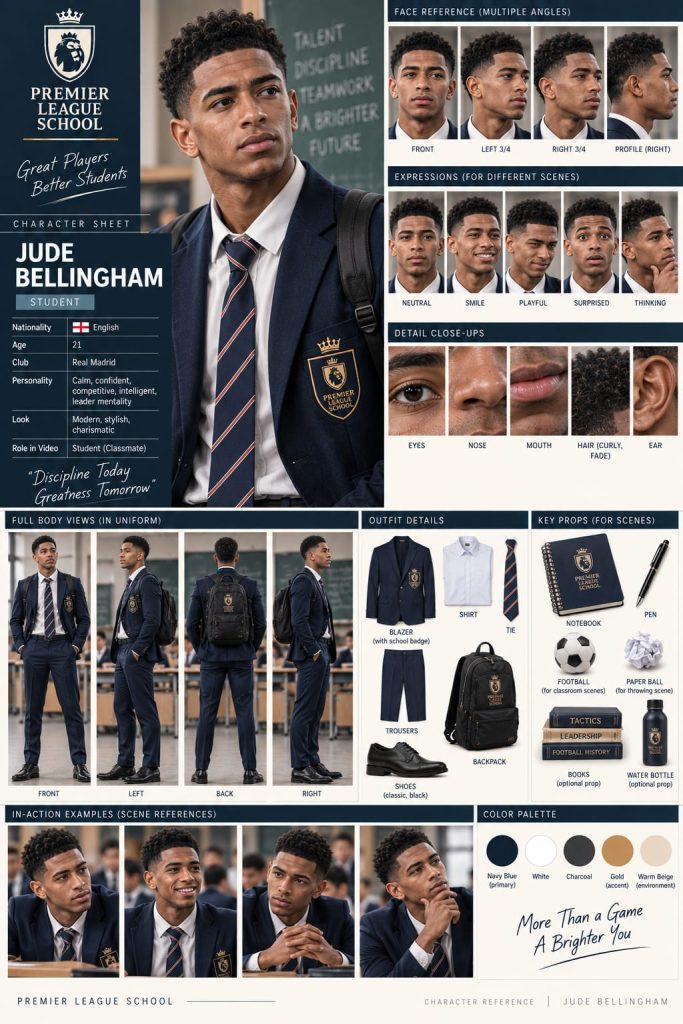
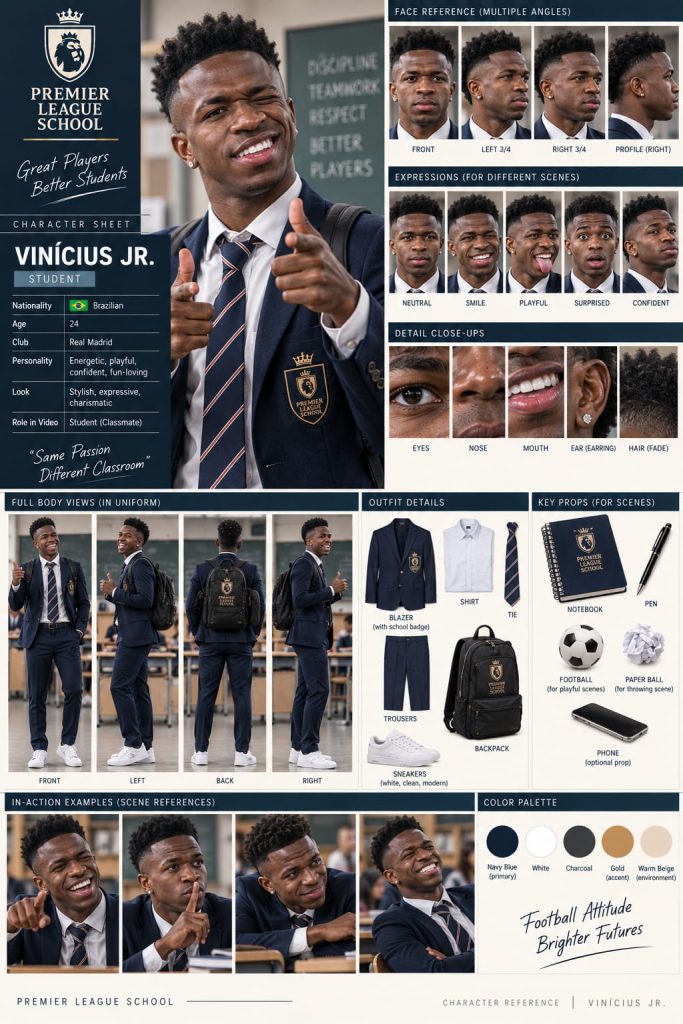
Character sheets established facial features, hairstyles, expressions, full-body appearance, school uniforms, accessories and recurring props. These references created a stronger visual anchor for each scene.
The Location Needed a Character Sheet Too
Character consistency alone was not enough. The classroom itself needed to remain recognizable across every generation.
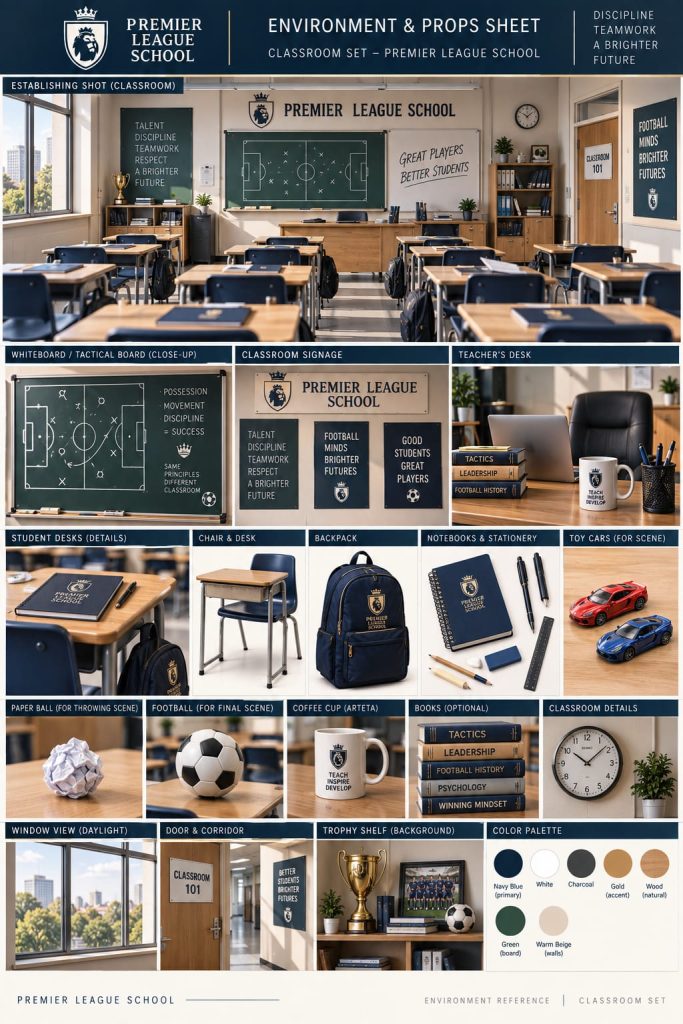
A dedicated environment and props sheet defined the classroom layout, desks, teacher’s area, windows, tactical board, lighting, books, bags, toy cars, paper balls and recurring objects used throughout the story.
The Production Workflow
AI generation was only one step in the middle of the production process. The complete workflow was designed to move from creative direction to controlled generation and finally into traditional editing.
Idea
→
Concept
→
Script
→
Master Prompt
→
Shot List
→
Character Sheets
→
Location Sheet
→
Scene References
→
Generate
→
Select Best Takes
→
Edit
→
Sound Design
→
Final Film
Generation Is Not the Same as Filmmaking
Not every generated second belongs in the final film. Some clips contained strong performances with only a few usable seconds. Others needed to be regenerated entirely.
Human creative direction remained responsible for deciding which takes worked, preserving rhythm, controlling comedy timing, assembling the narrative and designing the final sound experience.
The goal was never to make one AI model create the entire film. The goal was to build a production system where AI handled generation while human creative direction controlled the story, consistency, selection, rhythm and final edit.
The Final Result
The finished film combines independently generated sequences into one visual story with recurring characters, a consistent classroom environment and a clear comedic progression.
The project demonstrates a practical shift from isolated AI generation toward AI-assisted filmmaking: a workflow where generative tools become part of a broader creative production system.
Project Details
Want to See the Full Production Process?
The full Arabic case study documents the creative process in detail, including scripting, prompt development, scene planning, character consistency, location references, generation strategy and final editing.
Have an Idea That AI Could Bring to Life?
AI video becomes far more powerful when it is treated as a real production process — with creative direction, visual planning, consistent references and intentional editing.
Let’s turn the idea into a production system — and the production system into a film.
Building a Consistent AI Film Across Multiple Characters, Scenes and Generations
Premier League School is an AI-assisted short film that reimagines famous football players as students in a chaotic classroom, with Mikel Arteta trying to maintain order as their increasingly frustrated teacher.
The challenge was not generating one impressive AI shot. It was creating a complete story in which characters, clothing, environment, props and visual language remained recognizable across multiple independently generated scenes.
The project combined concept development, visual scripting, prompt engineering, character design, location references, AI video generation, shot selection, editing and sound design into one controlled production workflow.
One Story. Multiple AI Generations.
Instead of asking one model to generate an entire film at once, the story was divided into controlled production units that could be generated, evaluated and refined independently.
Generated as separate production sequences.
Each requiring consistent visual identity.
Edited into one continuous narrative.
Storytelling driven by action, timing and expressions.
Project Scope
AI Can Generate a Shot. Can It Generate a Film?
Generative video models can produce impressive individual clips, but narrative filmmaking introduces a different problem: continuity.
A face may change between scenes. Hair, clothing and body proportions can shift. A classroom can suddenly have a different board, different windows or a completely different layout.
When several independently generated clips are edited together, these small inconsistencies immediately reveal that the shots were created separately.
The challenge was not generating more footage. It was designing a system that made independent generations feel like parts of the same film.
Designing Consistency Before Generating Video
Before video generation began, each key character was treated like part of a traditional production pipeline.
Character sheets established facial features, hairstyles, expressions, full-body appearance, school uniforms, accessories and recurring props. These references created a stronger visual anchor for each scene.
The Location Needed a Character Sheet Too
Character consistency alone was not enough. The classroom itself needed to remain recognizable across every generation.
A dedicated environment and props sheet defined the classroom layout, desks, teacher’s area, windows, tactical board, lighting, books, bags, toy cars, paper balls and recurring objects used throughout the story.
The Production Workflow
AI generation was only one step in the middle of the production process. The complete workflow was designed to move from creative direction to controlled generation and finally into traditional editing.
Idea
→
Concept
→
Script
→
Master Prompt
→
Shot List
→
Character Sheets
→
Location Sheet
→
Scene References
→
Generate
→
Select Best Takes
→
Edit
→
Sound Design
→
Final Film
Generation Is Not the Same as Filmmaking
Not every generated second belongs in the final film. Some clips contained strong performances with only a few usable seconds. Others needed to be regenerated entirely.
Human creative direction remained responsible for deciding which takes worked, preserving rhythm, controlling comedy timing, assembling the narrative and designing the final sound experience.
The goal was never to make one AI model create the entire film. The goal was to build a production system where AI handled generation while human creative direction controlled the story, consistency, selection, rhythm and final edit.
The Final Result
The finished film combines independently generated sequences into one visual story with recurring characters, a consistent classroom environment and a clear comedic progression.
The project demonstrates a practical shift from isolated AI generation toward AI-assisted filmmaking: a workflow where generative tools become part of a broader creative production system.
Project Details
Want to See the Full Production Process?
The full Arabic case study documents the creative process in detail, including scripting, prompt development, scene planning, character consistency, location references, generation strategy and final editing.
Have an Idea That AI Could Bring to Life?
AI video becomes far more powerful when it is treated as a real production process — with creative direction, visual planning, consistent references and intentional editing.
Let’s turn the idea into a production system — and the production system into a film.