
AI strategy, media innovation, and practical growth systems.
I help brands and creators use AI, digital media, SEO, and automation to produce better content and grow with clarity.
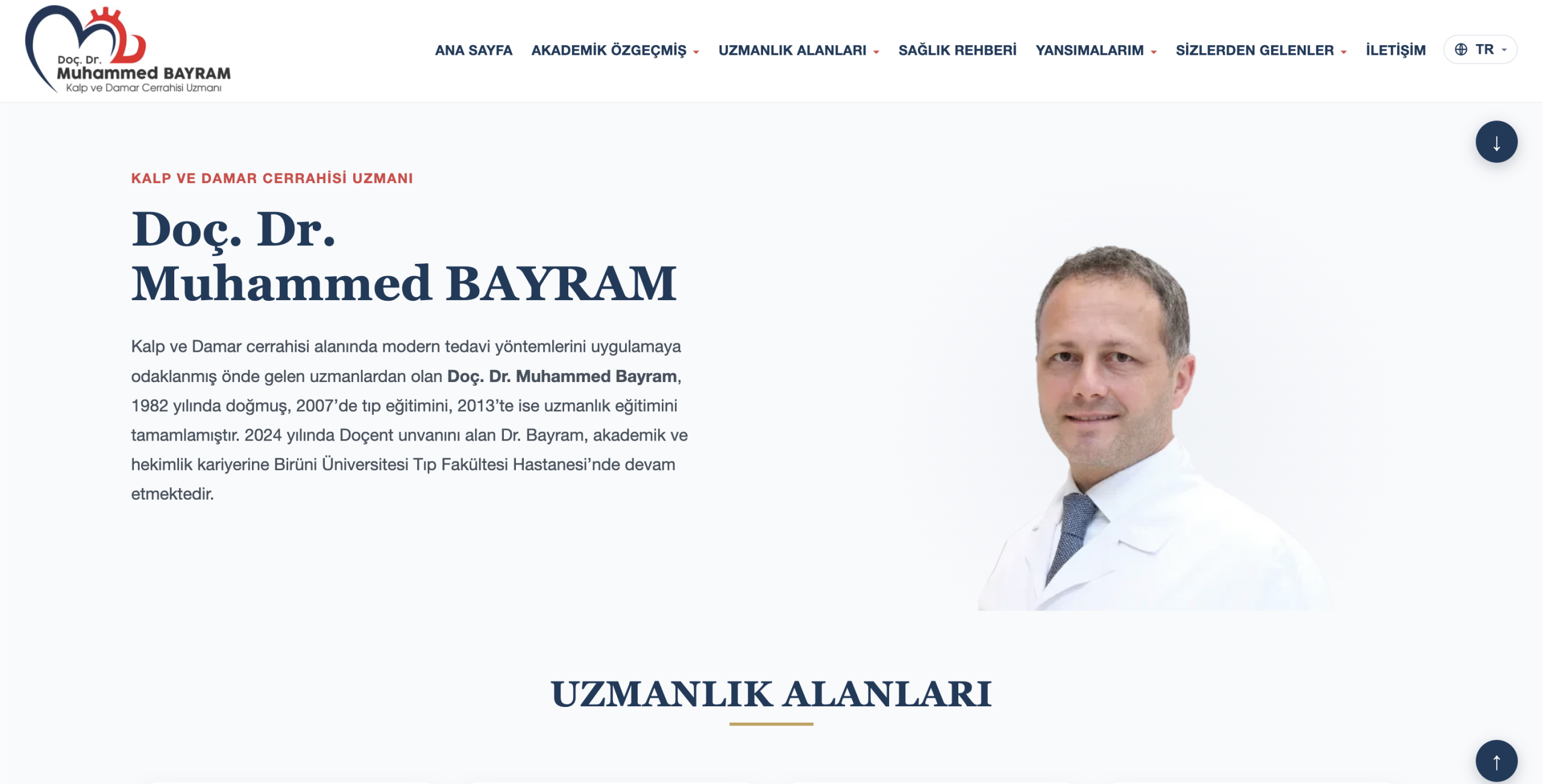
Recovering a 500-Page Multilingual Website Without Losing Its SEO History
MuhammedBayram.com is a multilingual medical website serving audiences across five languages.
The project required far more than a visual redesign: it required recovering a complex website architecture while protecting years of accumulated search visibility.
The website had previously been moved from WordPress to a static implementation.
That transition created significant technical SEO challenges, including broken legacy URLs,
inconsistent indexing, redirect issues, missing sitemap infrastructure, and hundreds of pages
that needed to be carefully mapped and preserved.
The objective was to rebuild the platform on WordPress while retaining as much of its historical URL structure,
multilingual architecture, and organic search value as technically possible.
The Scale of the Challenge
This was not a small website migration. The platform contained hundreds of URLs distributed across multiple languages, with existing search history that could not simply be discarded.
Distributed across the multilingual platform.
Requiring a coordinated multilingual architecture.
Evaluated for preservation, recovery, or redirection.
Project Scope
The Real Challenge Wasn’t the Design
Rebuilding the visual interface was only one part of the project.
The real challenge was reconstructing the platform without destroying the historical signals that search engines had already associated with hundreds of existing pages.
Old URLs had to be identified, language structures understood, indexing problems reviewed,
and a new WordPress environment created that could support future growth without repeating the structural problems of the previous migration.
The goal was not simply to move the website.
It was to preserve its digital history while rebuilding its technical foundation.
A Recovery-First Migration Strategy
Map the Existing Website
Existing URLs, indexed pages, language structures, redirects, noindex issues, and legacy content were reviewed before rebuilding began.
Protect Valuable URLs
Legacy URL structures were retained wherever possible to minimize unnecessary disruption to existing search visibility.
Rebuild on WordPress
A new WordPress environment restored editorial flexibility and provided a scalable foundation for multilingual content management.
Restore Search Visibility
Sitemap structure, indexing signals, internal architecture, redirects, and technical SEO elements were rebuilt around search recovery.
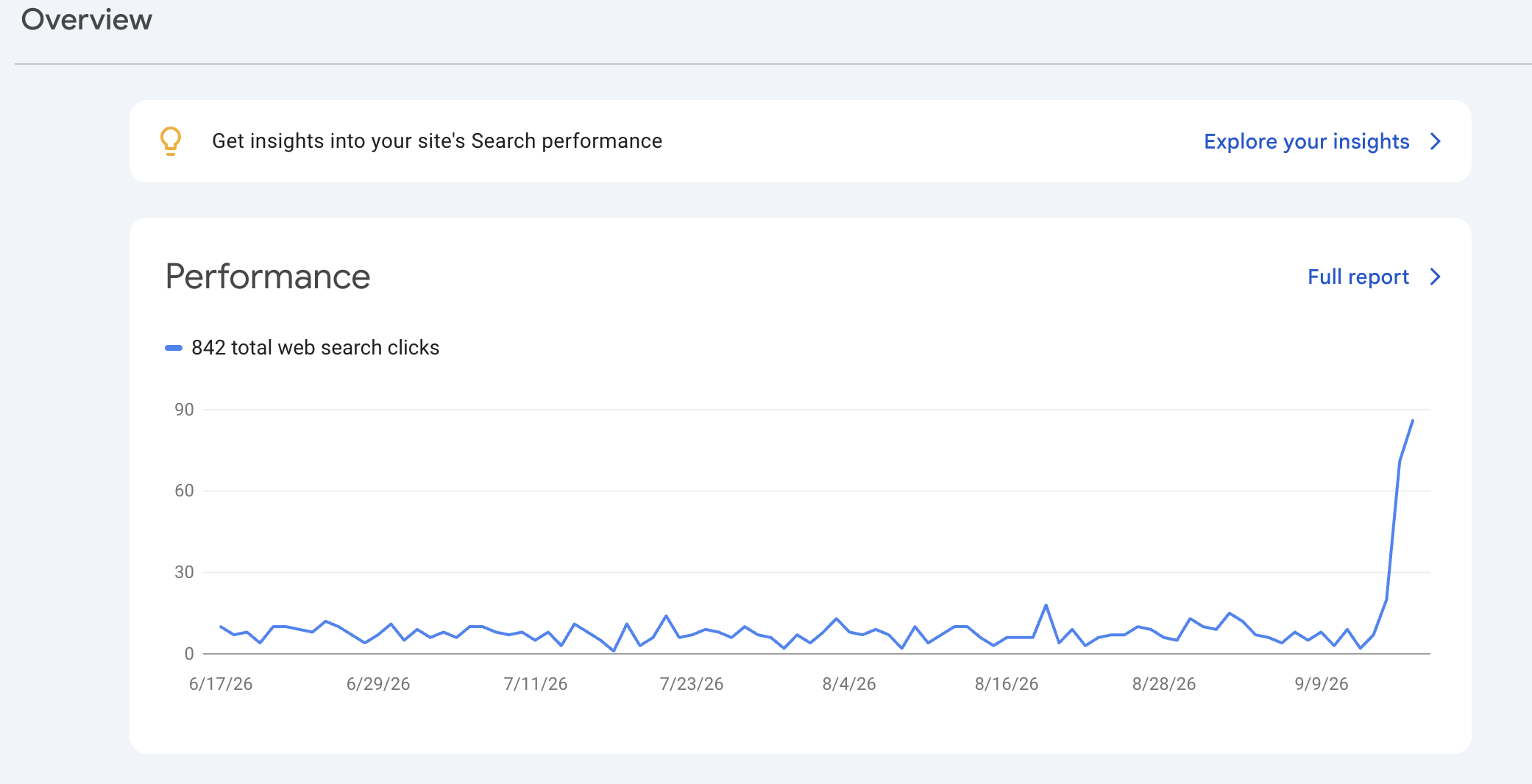
From Single-Digit Daily Traffic to Rapid Organic Growth
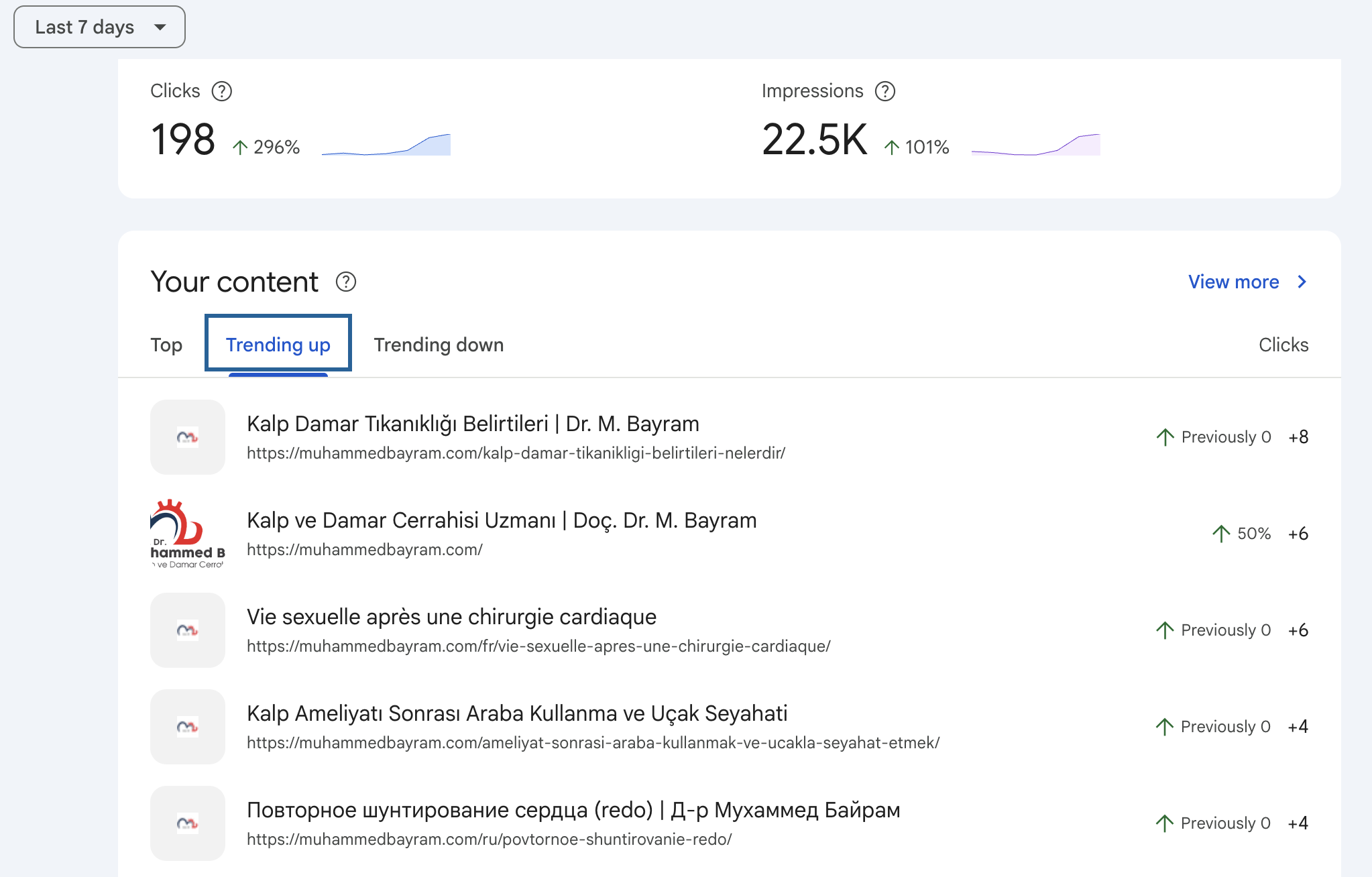
Following the WordPress rebuild and technical SEO recovery, Google Search Console began showing a clear acceleration in organic performance.
After months of relatively stable search traffic, the site entered a sharp upward growth phase.
In the latest 7-day period
In the latest 7-day period
Compared with the previous period
Compared with the previous period
Project Details
Planning a Complex Website Migration?
Website migrations should protect what already works while creating a stronger technical foundation for future growth.
From URL preservation and multilingual architecture to WordPress rebuilding and technical SEO,
every migration decision can affect long-term search performance.
Rebuild the platform without throwing away its digital history.
Recovering a 500-Page Multilingual Website Without Losing Its SEO History
MuhammedBayram.com is a multilingual medical website serving audiences across five languages.
The project required far more than a visual redesign: it required recovering a complex website architecture while protecting years of accumulated search visibility.
The website had previously been moved from WordPress to a static implementation.
That transition created significant technical SEO challenges, including broken legacy URLs,
inconsistent indexing, redirect issues, missing sitemap infrastructure, and hundreds of pages
that needed to be carefully mapped and preserved.
The objective was to rebuild the platform on WordPress while retaining as much of its historical URL structure,
multilingual architecture, and organic search value as technically possible.
The Scale of the Challenge
This was not a small website migration. The platform contained hundreds of URLs distributed across multiple languages, with existing search history that could not simply be discarded.
Distributed across the multilingual platform.
Requiring a coordinated multilingual architecture.
Evaluated for preservation, recovery, or redirection.
Project Scope
The Real Challenge Wasn’t the Design
Rebuilding the visual interface was only one part of the project.
The real challenge was reconstructing the platform without destroying the historical signals that search engines had already associated with hundreds of existing pages.
Old URLs had to be identified, language structures understood, indexing problems reviewed,
and a new WordPress environment created that could support future growth without repeating the structural problems of the previous migration.
The goal was not simply to move the website.
It was to preserve its digital history while rebuilding its technical foundation.
A Recovery-First Migration Strategy
Map the Existing Website
Existing URLs, indexed pages, language structures, redirects, noindex issues, and legacy content were reviewed before rebuilding began.
Protect Valuable URLs
Legacy URL structures were retained wherever possible to minimize unnecessary disruption to existing search visibility.
Rebuild on WordPress
A new WordPress environment restored editorial flexibility and provided a scalable foundation for multilingual content management.
Restore Search Visibility
Sitemap structure, indexing signals, internal architecture, redirects, and technical SEO elements were rebuilt around search recovery.
From Single-Digit Daily Traffic to Rapid Organic Growth
Following the WordPress rebuild and technical SEO recovery, Google Search Console began showing a clear acceleration in organic performance.
After months of relatively stable search traffic, the site entered a sharp upward growth phase.
In the latest 7-day period
In the latest 7-day period
Compared with the previous period
Compared with the previous period
Project Details
Planning a Complex Website Migration?
Website migrations should protect what already works while creating a stronger technical foundation for future growth.
From URL preservation and multilingual architecture to WordPress rebuilding and technical SEO,
every migration decision can affect long-term search performance.
Rebuild the platform without throwing away its digital history.